COCKROACHES
Identify the cockroach you found, learn whether it is a health risk, and see the safest ways to get rid of it for good.

Cockroaches don’t sting and rarely bite, but they aren’t harmless. Their droppings, shed skins and saliva can trigger allergies and asthma, and they can spread bacteria onto food and counters. To get rid of them, remove food, water and hiding spots, use baits and gels instead of sprays or foggers, and call a licensed pro for an active infestation.
Cockroaches: Identification, Prevention & Control
Cockroaches are among the most common pests in US homes and apartments. Thousands of cockroach species live worldwide, but only a handful regularly come indoors in the United States. The German cockroach is the one most likely to infest kitchens and bathrooms, while larger species such as the American cockroach usually wander in from drains, basements and the yard.
No US cockroach is venomous, and they rarely bite. The real concern is health: cockroach allergens are a well-known asthma trigger, especially for children, and roaches can carry germs from drains and trash onto surfaces where you prepare food. Telling the species apart helps you choose the right fix, and our guide German Cockroach vs American Cockroach explains the differences.
One large roach after a heavy rain is often a stray from outdoors. Small roaches seen in daytime, droppings in cabinets or egg cases behind appliances usually point to an established infestation that store-bought sprays rarely solve. That is the time to get a free quote from a licensed local pro.
Top Cockroach Guides
Roaches in Texas
The cockroaches Texans find most, from German roaches to big flying American roaches.
Cockroaches in California
Which roaches live in California homes and why they keep coming back.
German Cockroach vs American Cockroach
How to tell the two most common US roaches apart, and why it matters.
What Kills Cockroaches Instantly
Fast, safe ways to deal with the roach in front of you right now.
Common Types of Cockroaches in US Homes

German Cockroach
Small, light brown with two dark stripes behind the head; lives in kitchens and bathrooms.

American Cockroach
Large, reddish-brown, up to 2 inches; often called a ‘water bug’ and found near drains and basements.
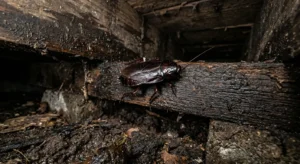
Oriental Cockroach
Shiny black to dark brown, about 1 inch; prefers damp, cool basements and crawl spaces.

Brown-Banded Cockroach
Small with two light bands across the body; hides high up in furniture and electronics.
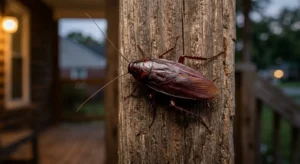
Smokybrown Cockroach
Large, dark mahogany and a strong flier; drawn to lights in warm, humid areas.

Wood Cockroach
Brown, lives outdoors under bark and leaf litter; wanders in by accident and rarely survives indoors.
Are Cockroaches Dangerous?
Cockroaches don’t sting and rarely bite. Their droppings, shed skins and saliva contain allergens that can trigger allergies and asthma, especially in children, and they can carry bacteria onto food and surfaces. Indoor breeders like the German cockroach matter most, because they live right where you cook and eat.
Signs of an infestation:
- Droppings that look like black pepper or coffee grounds
- Brown smear marks along walls, cabinets and baseboards
- Egg cases (oothecae) in corners, drawers and behind appliances
- A musty, oily smell that gets stronger over time
- Roaches seen during the daytime
If someone in your home has asthma or allergy symptoms that get worse, talk to a healthcare provider. For an active infestation, call a licensed pro.
Where Cockroaches Hide
- Behind and under fridges, stoves and dishwashers
- Under sinks and around pipes
- Bathrooms and floor drains
- Inside cabinets, cardboard boxes and paper bags
- Basements, crawl spaces and laundry rooms
Life Cycle
- Egg case (ootheca): a small brown capsule that holds many eggs.
- Nymph: wingless young that molt several times and look white right after each molt.
- Adult: fully grown and able to breed; German roaches can produce several generations a year indoors.
Every Cockroach Guide on Beetle Detectives
Cockroaches by State
Cockroach Identification
Cockroach Facts & Behavior
How to Keep Cockroaches Out of Your Home
Fix Leaks and Drips
Roaches need water even more than food. Repair dripping faucets, sweating pipes and leaks under sinks.
Seal Gaps and Pipe Openings
Caulk cracks and fill gaps around plumbing, baseboards and cabinets where roaches enter and hide.
Clean Crumbs and Grease Daily
Wipe counters, sweep floors and degrease the stovetop and the floor behind appliances.
Store Food Sealed
Keep food and pet food in sealed containers, and never leave dirty dishes out overnight.
Take Trash Out Nightly
Use a bin with a tight lid, empty kitchen trash every night and rinse recyclables.
Cut the Cardboard
Cardboard boxes and paper bags give roaches shelter and can carry them in. Switch to plastic bins.
Find a Cockroach Control Pro Near You
Enter your ZIP code and we will connect you with a licensed, independent pest control provider in your area. You get a free, no-obligation quote for cockroach treatment.
Prefer email? Write to [email protected] with your ZIP code and cockroach problem.
Beetle Detectives is a referral service. Treatments are performed by independent local providers.
Local Pest Control Pages
Cockroaches FAQs
Why do cockroaches suddenly appear?
Roaches usually show up suddenly because something changed. Heavy rain can flood their outdoor hiding spots, a heat wave or cold snap can drive them inside, and a neighbor’s treatment can push them toward your unit. They also ride in on grocery bags, cardboard boxes and used appliances. One sighting doesn’t always mean an infestation, but small roaches in the kitchen are worth acting on quickly. Read the full guide: Why Do Cockroaches Suddenly Appear?.
If you kill a cockroach, will more come?
There’s no good evidence that killing one roach attracts more. The real issue is that one roach often means others are hiding nearby, because cockroaches shelter in groups and come out mostly at night. A crushed female may still be carrying an egg case, so clean up and throw it away right after. Read the full guide: If You Kill a Cockroach, Will More Come?.
What does cockroach poop look like?
Small roaches like the German cockroach leave droppings that look like black pepper or coffee grounds, often in cabinet corners, drawers and behind appliances. Larger roaches like the American cockroach leave small, blunt pellets with ridges along the sides. In damp spots, droppings can smear into brown or black streaks. Read the full guide: What Does Cockroach Poop Look Like?.
How fast do roaches multiply?
German cockroaches multiply the fastest. One egg case holds about 30 to 40 eggs, and the young can grow into breeding adults in roughly two months in a warm home. Each female can produce several egg cases in her life, so a few roaches can become a heavy infestation within months. Larger species such as American and Oriental cockroaches breed much more slowly. Read the full guide: How Fast Do Roaches Multiply?.
What smells do roaches hate?
Some essential oils, such as peppermint, may repel cockroaches for a short time, but no smell will get rid of an infestation on its own. Roaches stay where they find food, water and shelter. Cleaning, sealing gaps and using baits matter far more than scents, so treat repellent smells as a small extra, not your main plan. Read the full guide: What Do Roaches Hate?.
Does bleach kill cockroaches?
Bleach can kill a roach that gets soaked with it, but it isn’t a practical way to control an infestation. It doesn’t reach roaches hiding in walls and cracks, it leaves no lasting effect, and its fumes can irritate your lungs. Never mix bleach with ammonia or other cleaners. It is useful for cleaning up the droppings and grease that attract roaches. Read the full guide: Does Bleach Kill Cockroaches?.
Cockroach Problem? Get a Local Pro.
Tell us your ZIP code and we will match you with a licensed, independent pest control provider near you. Free and no obligation.