Pest Library
BEETLES
Identify the beetles in your home, learn which ones damage food, fabric or wood, and find out how to get rid of them and keep them out.
Quick Answer
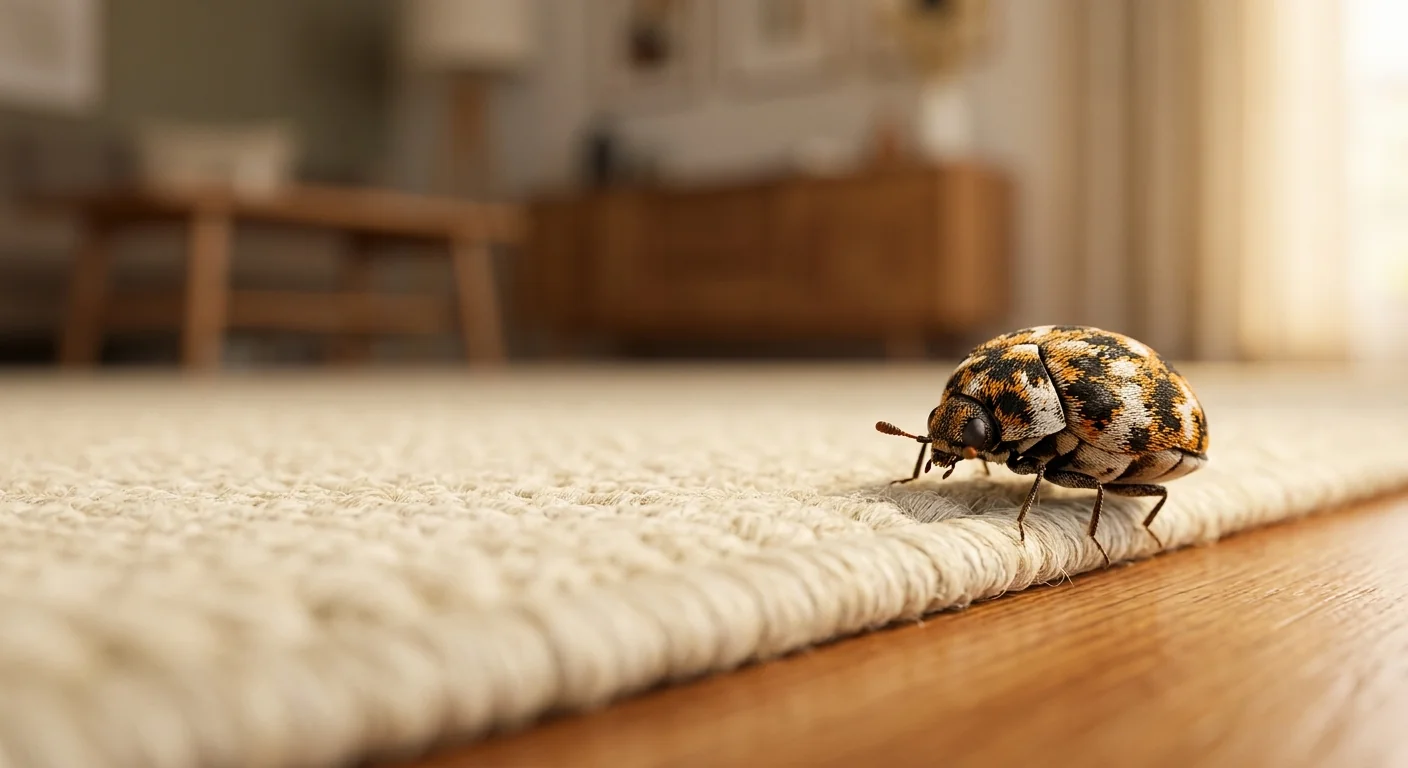
Most beetles found indoors are harmless: they don’t sting and almost none bite. The real problems are damage and nuisance. Carpet beetle larvae chew wool and other natural fibers, and pantry beetles infest dry food. To get rid of them, find and remove the infested source, vacuum often, store food in sealed containers and call a licensed pro if they keep returning.
Beetles: Identification, Prevention & Control
Beetles are the largest group of insects on Earth, and a handful of species regularly turn up in US homes. Some wander in from the yard, some gather on sunny walls looking for a place to spend the winter, and others live their whole life cycle in a pantry, closet or piece of wood. Finding one or two is common and rarely a reason to worry.
Indoor beetles are not considered dangerous to people. They don’t spread disease and almost none bite. The bristly larvae of carpet beetles can leave itchy red bumps on sensitive skin, and large indoor groups of Asian lady beetles can trigger allergies in some people. The bigger concern is damage: carpet beetles chew wool, silk and feathers; drugstore, cigarette and flour beetles ruin stored food; and powderpost beetles leave hardwood riddled with tiny holes.
Most small problems can be solved with the steps in our guide How to Get Rid of Beetles in Your House. Call a professional if beetles keep coming back after a deep clean, you can’t find the source, or you see pinholes and fine powder in wood. You can get a free beetle control quote from a licensed local provider.
Start Here
Top Beetles Guides
How to Get Rid of Beetles in Your House
Find the source, clean it out and keep beetles from coming back.
Carpet Beetle Bites
Itchy red bumps but no bugs in sight? Here's what's really going on.
Little Black Beetles in House
Identify the small black beetles in your kitchen, bathroom or windowsill.
Identification
Common Types of Beetles in US Homes
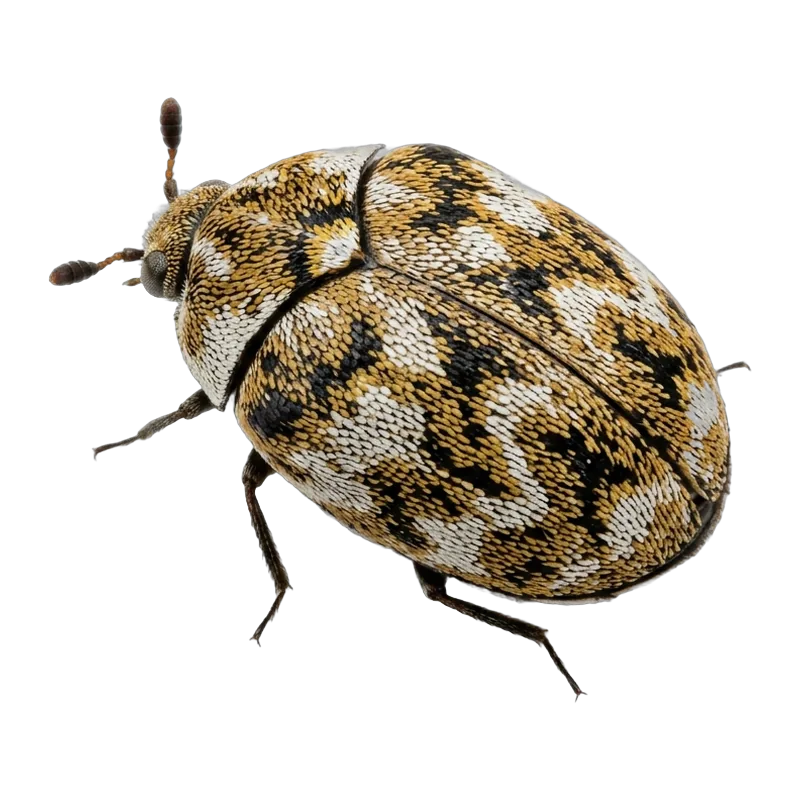
Carpet Beetle
Tiny, round and mottled black, white and orange; larvae are fuzzy and brown.
Damages fabrics
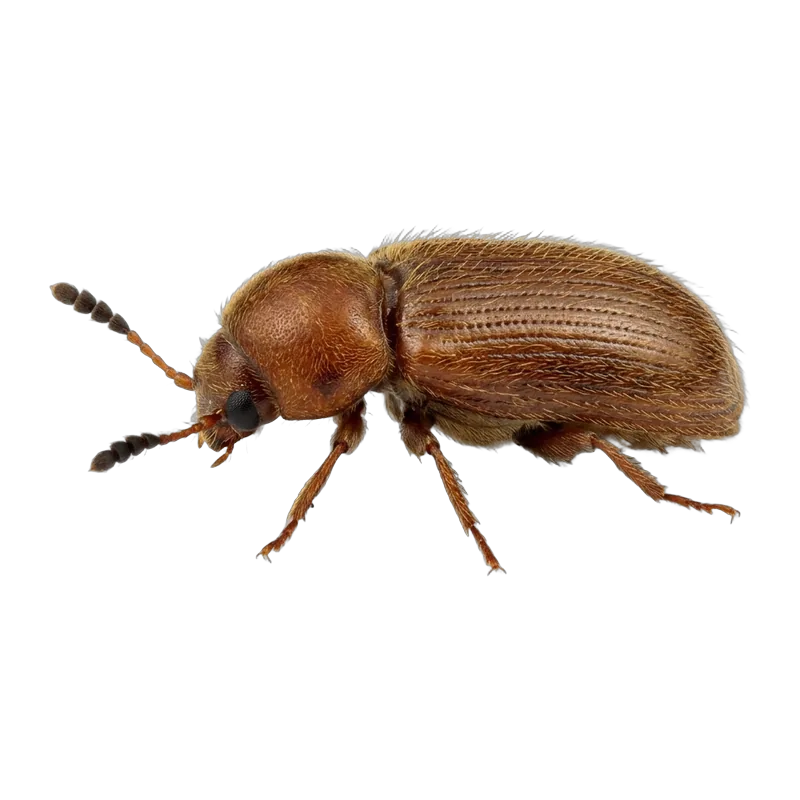
Drugstore Beetle
Small, reddish-brown and oval; found in flour, spices and dry goods.
Damages food
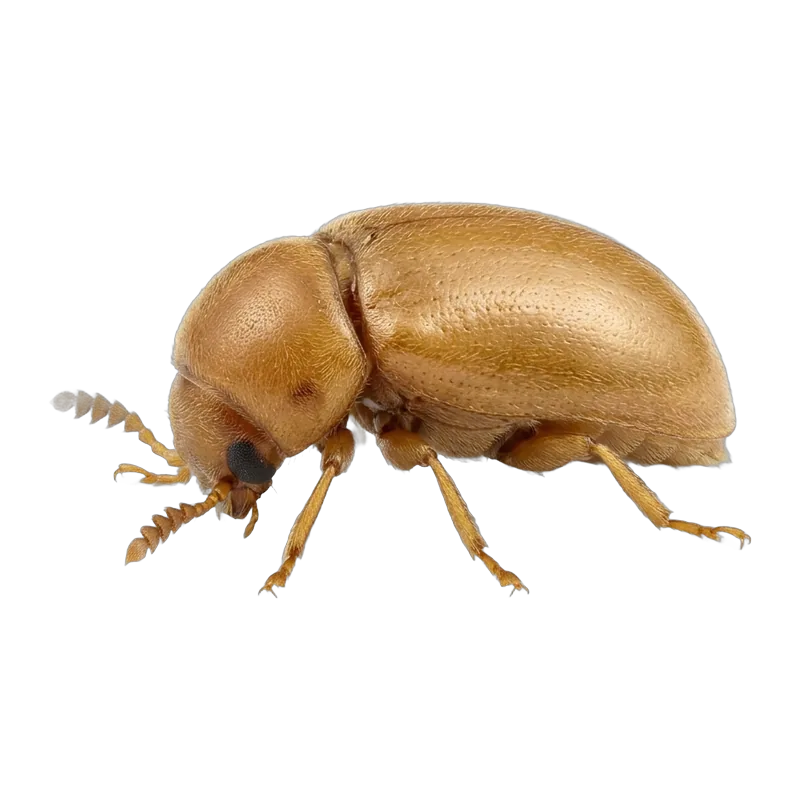
Cigarette Beetle
Tiny, light brown and humpbacked; infests spices, dried flowers and pet food.
Damages food
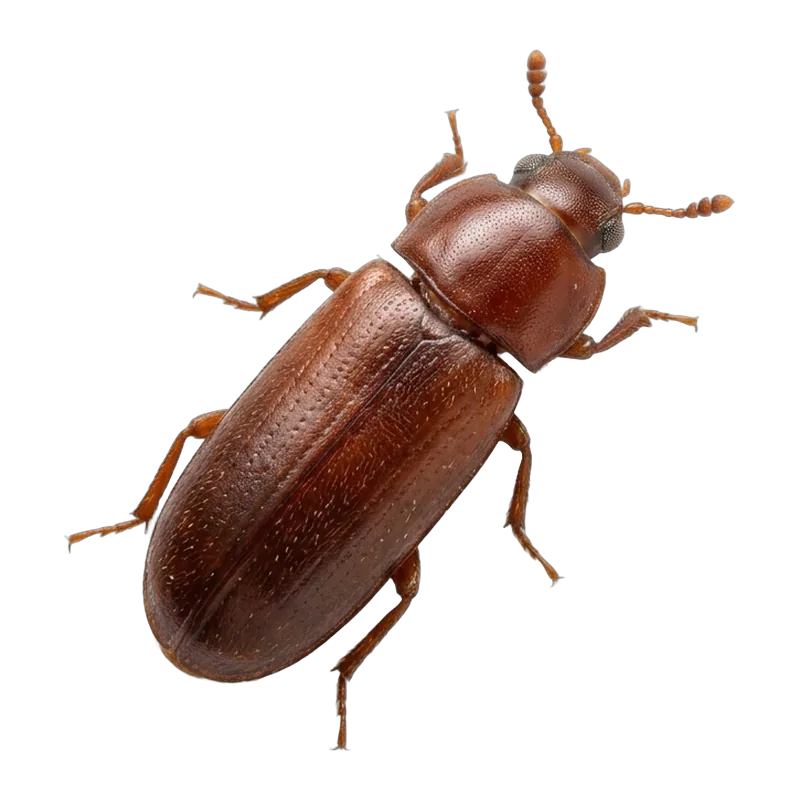
Flour Beetle
Slender and reddish-brown; lives in flour, cereal and baking mixes.
Damages food
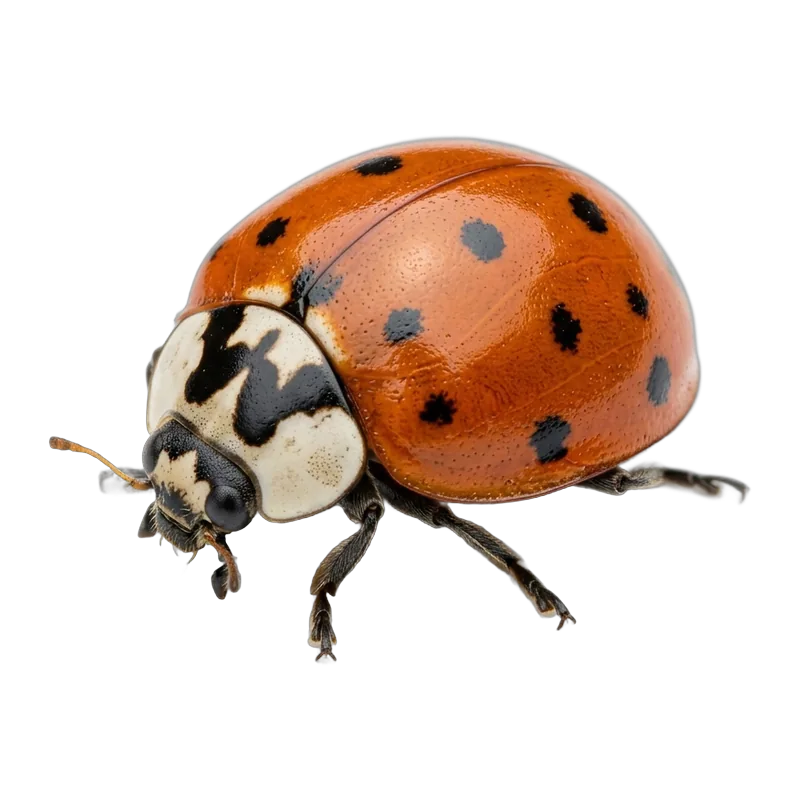
Asian Lady Beetle
Orange to red with black spots; gathers on sunny walls in fall.
Nuisance
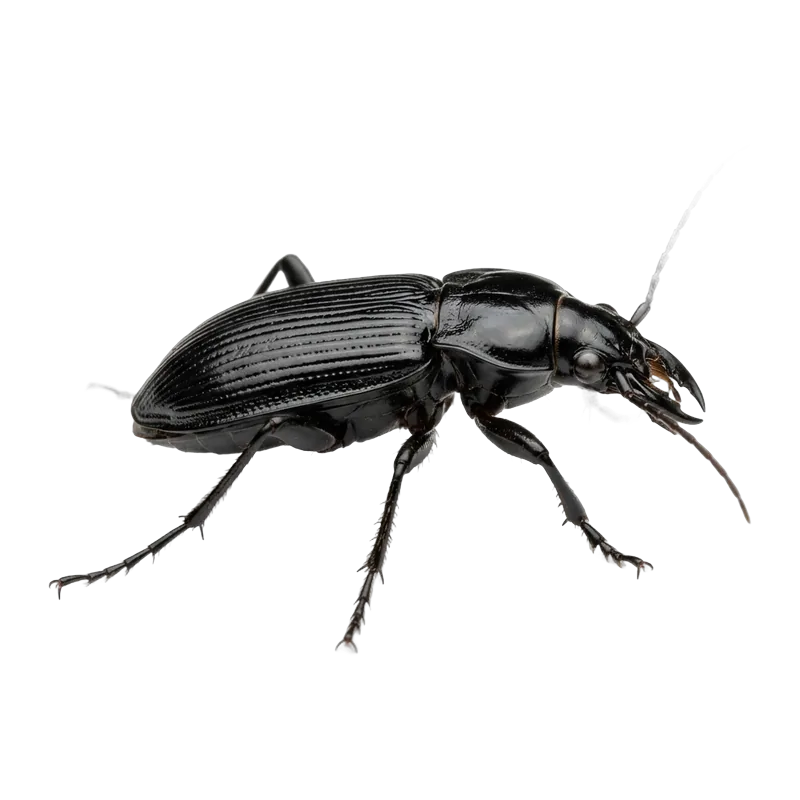
Ground Beetle
Shiny black and fast-running; wanders in from the yard at night.
Harmless
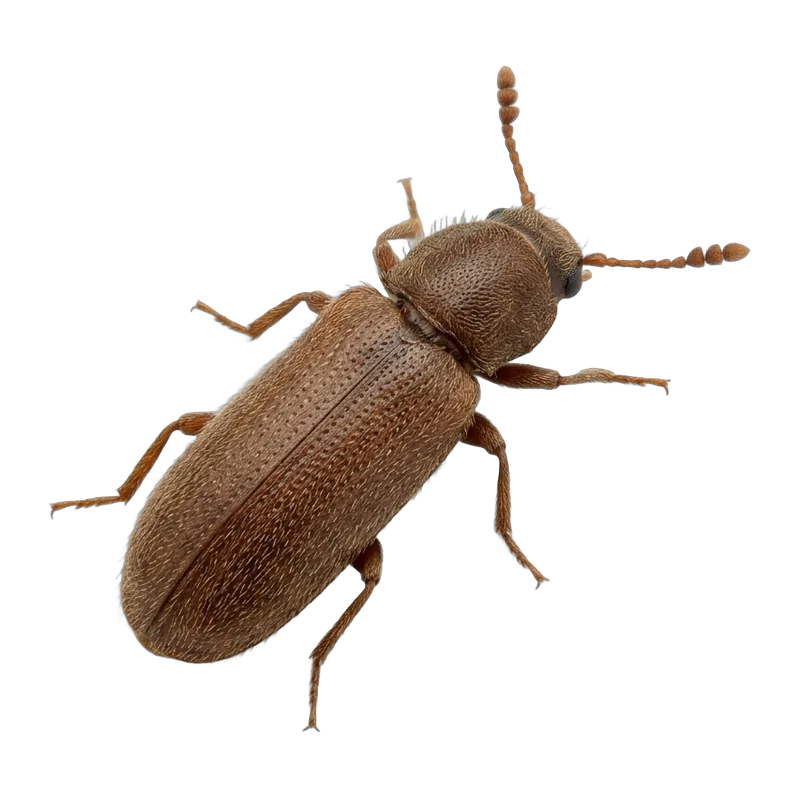
Powderpost Beetle
Small and brown; leaves pinholes and fine powder in hardwood.
Damages wood
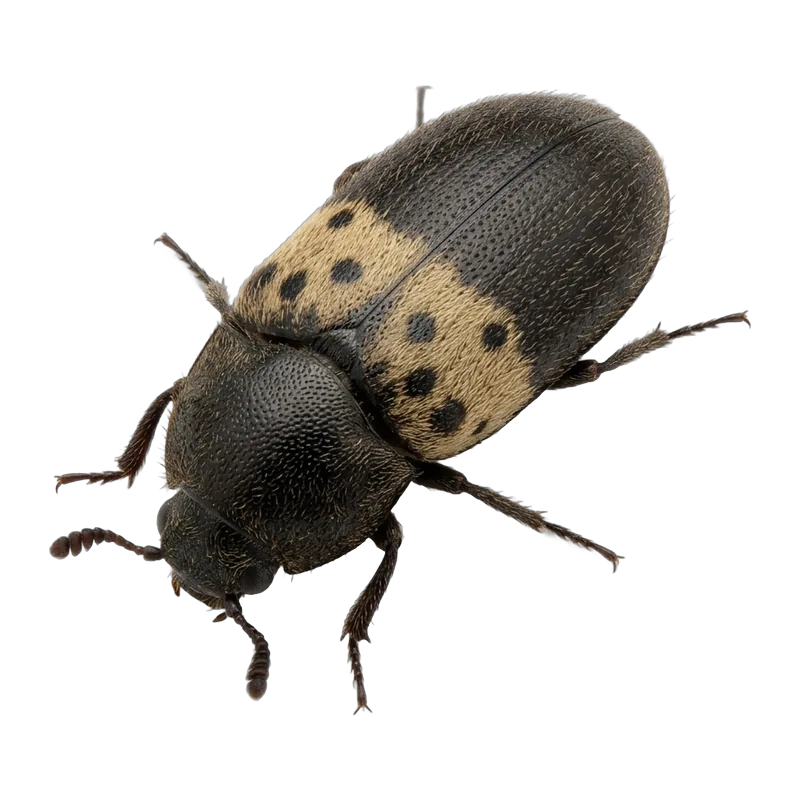
Larder Beetle
Dark with a pale band across its back; feeds on pet food, meats and dead insects.
Damages food
Are Beetles Dangerous?
No. Beetles don’t sting and almost none bite. Most indoor beetles are a nuisance or a damage problem, not a health threat. A few deserve extra attention:
- Carpet beetle larvae: their tiny bristles can cause itchy red bumps that look like bites.
- Asian lady beetles: may pinch when handled, and large indoor groups can trigger allergies.
- Pantry beetles: don’t harm people directly, but infested food should be thrown away.
Signs of beetle damage:
- Holes in wool clothing, rugs or blankets
- Shed larval skins in closets or along baseboards
- Beetles or larvae inside food packages
- Pinholes with fine, flour-like powder in wood
Contact a healthcare provider if a rash doesn’t clear up or you notice allergy symptoms. Call a licensed pro if damage keeps spreading.
Where Beetles Hide
- Pantries and pet food
- Closets, stored clothing and wool rugs
- Baseboards, under furniture and carpet edges
- Attics, wall voids and window sills
- Hardwood floors, furniture and trim
Life Cycle
- Egg: laid in food, fabric, wood or debris.
- Larva: the damaging stage for fabric and pantry beetles.
- Pupa: a resting stage while the larva becomes an adult.
- Adult: mates, lays eggs and is often drawn to windows and light.
All Guides
Every Beetles Guide on Beetle Detectives
More Beetle Guides
Prevention
How to Keep Beetles Out of Your Home
Seal Up Stored Food
Keep flour, cereal, spices and pet food in airtight glass, metal or heavy plastic containers.
Vacuum Often
Vacuum carpets, rug edges, baseboards and under furniture to remove eggs, larvae and the lint they feed on.
Store Clothing Clean
Wash or dry-clean wool and other natural fibers before storing them in sealed bins or bags.
Seal Gaps Before Fall
Caulk cracks around windows, doors and siding before Asian lady beetles look for winter shelter.
Rethink Outdoor Lighting
Many beetles are drawn to light. Use yellow bug bulbs or motion-sensor lights near doors.
Inspect What You Bring In
Check secondhand rugs, furniture, cut flowers and bulk food before bringing them inside.
Free Local Quote
Find a Beetle Control Pro Near You
Tell us your ZIP code and we’ll connect you with a licensed, independent beetle control provider in your area. It’s free, with no obligation.
Prefer email? Write to [email protected] with your ZIP code and beetle problem.
Beetle Detectives is a referral service. Treatments are performed by independent local providers.
Local Beetle Control Pages
Beetles FAQs
Do carpet beetles bite?
No. Carpet beetles don’t bite people. Their larvae are covered in tiny bristles, and in some people contact with those hairs causes itchy red bumps that look like bites. Washing bedding and vacuuming where larvae hide usually brings relief. Read more in Carpet Beetle Bites.
Why do I have little black beetles in my house?
Small black beetles indoors are usually carpet beetle adults, ground beetles that wandered in from the yard, or pantry beetles coming from stored food. Where you find them is the best clue: windowsills often point to carpet beetles, kitchen cabinets to pantry beetles, and floors near doors to outdoor beetles. See Little Black Beetles in House.
How do I get rid of beetles in my house?
Start by finding the source, such as an infested food package, a stored wool item or a gap where outdoor beetles get in. Throw away infested food, wash or dry-clean affected fabrics, and vacuum carpets, baseboards and closets thoroughly. Then store food in airtight containers and seal entry gaps. Get the full steps in How to Get Rid of Beetles in Your House.
What bugs look like chia seeds?
Several small beetles are about the size and color of a chia seed. Drugstore and cigarette beetles are tiny, oval and brown, and adult carpet beetles are round and dark. If the specks move or show up in dry food, you are most likely dealing with pantry beetles. Compare them in Bugs That Look Like Chia Seeds.
Where do carpet beetles come from?
Adult carpet beetles live outdoors and feed on flower pollen. They fly in through open windows and doors or ride in on cut flowers, then lay eggs on wool, fur, feathers, lint and pet hair. The larvae feed in dark, undisturbed spots like closets, rug edges and under furniture. Learn more in Carpet Beetle Bites.
Are Asian lady beetles harmful?
Asian lady beetles are mostly a nuisance. They don’t damage your home or spread disease, but they can pinch skin and release a yellowish fluid that smells and may stain surfaces. Large groups indoors can trigger allergies in some people. Vacuum them up instead of crushing them, and seal gaps around windows and siding before fall.
Get a Free Quote Today
Beetles Problem? Get a Local Pro.
Tell us your ZIP code and we’ll match you with a licensed local beetle control provider. Free, with no obligation.