You wake up with small, itchy red bumps. There are no mosquitoes around, you’ve checked the bed for bed bugs, and the only bugs you’ve spotted are a few tiny round beetles on the windowsill. So you start searching for “carpet beetle bites.”
Here’s the good news: carpet beetles don’t actually bite. But they can still leave you with a rash that looks and feels a lot like bites. In this guide, we’ll explain what’s really going on, how to tell it apart from other bug bites, how to calm the itch, and how to get the beetles out of your home for good.
Do Carpet Beetles Actually Bite?
No. Neither adult carpet beetles nor their larvae bite humans or pets. They don’t feed on blood, and their mouthparts are made for chewing dry materials, not skin.
Adult carpet beetles are tiny (about 1/16 to 1/8 inch), oval, and often covered in a mottled pattern of white, brown, and yellow scales. Outdoors, they feed on pollen and nectar. That’s why you often spot them on windowsills, trying to get back outside toward the light.
The larvae are the real troublemakers. These small, fuzzy, worm-like creatures are sometimes called “woolly bears.” They feed on natural fibers and animal-based materials such as:
- Wool rugs, blankets, and sweaters
- Silk, feathers, fur, and leather
- Pet hair, lint, and dust buildup
- Dead insects in corners, vents, and light fixtures
- Some stored dry foods like cereal and pet food
While they eat, larvae shed their skins and leave behind loose, bristly hairs. Those hairs are what cause the “bites.”
What Do Carpet Beetle “Bites” Look Like?
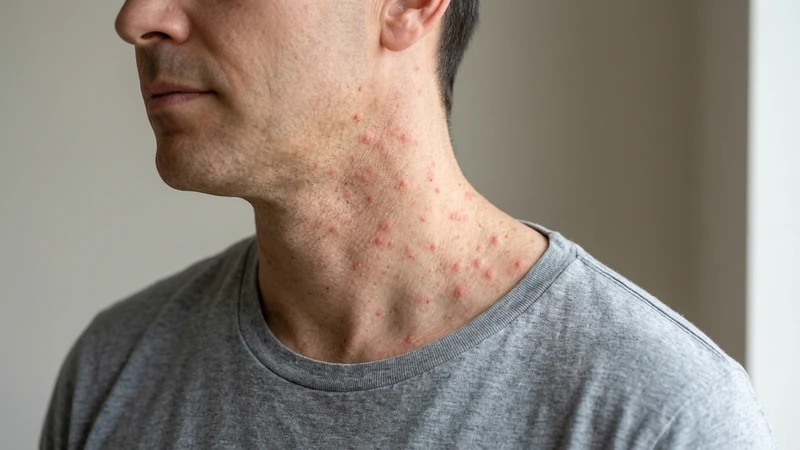
The medical name for this reaction is carpet beetle dermatitis. Carpet beetle larvae have tiny, spear-shaped hairs that can poke into the skin and trigger an allergic response in sensitive people. According to Penn State Extension’s guide on carpet beetle dermatitis, biopsies and clinical tests have linked these skin reactions to larval hairs, and people usually become sensitized only after long-term exposure.
That explains a common question: “Why does only one person in my house react?” Not everyone is allergic, so two people can sleep in the same bed and only one gets the rash.
Common signs include:
- Small red bumps or welts that look like mosquito bites
- Intense itching, often worse at night or after waking up
- A raised, bumpy rash that can look like hives or eczema
- Scabbed or crusted spots, usually from scratching
- Clusters on exposed skin such as the neck, face, arms, shoulders, and legs
In some people, airborne larval hairs can also irritate the eyes, nose, or throat, causing watery eyes or a scratchy feeling. The rash usually appears where skin touched infested bedding, upholstered furniture, rugs, or clothing stored for a long time.
Carpet Beetle Rash vs. Bed Bug and Flea Bites
Carpet beetle dermatitis is easy to confuse with real insect bites. The comparison below shows the main differences.
If you find shed larval skins in closets, under furniture, or along baseboards, but no blood stains on your sheets, carpet beetles are the more likely cause.
How to Treat Carpet Beetle “Bites” at Home
Most carpet beetle rashes clear up on their own once you stop touching the larval hairs. These simple steps can help calm your skin in the meantime:
- Wash the area gently. Use mild soap and lukewarm water to rinse off any hairs still on your skin.
- Apply a cool compress. A clean, damp cloth for 10 to 15 minutes can ease itching and swelling.
- Try an anti-itch cream. Over-the-counter hydrocortisone or calamine lotion soothes most mild rashes.
- Consider an antihistamine. An oral allergy medicine may reduce itching, especially at night. Check the label or ask a pharmacist first.
- Don’t scratch. Scratching can break the skin and lead to infection. Keep nails short if the itch is strong.
- Change and wash your bedding. Wash sheets, pillowcases, and blankets in hot water so you’re not re-exposed every night.
When to See a Doctor
This article is general information, not medical advice. Contact a doctor or dermatologist if:
- The rash spreads, gets worse, or lasts more than a week or two
- You notice pus, warmth, or increasing redness (signs of infection)
- You have trouble breathing, wheezing, or swelling of the face or throat (seek emergency care)
- You’re not sure what’s causing the rash
A doctor can confirm whether it’s carpet beetle dermatitis or something else, such as scabies, eczema, or another allergy, and may prescribe a stronger cream if needed.
How to Get Rid of Carpet Beetles (and Stop the Rash)
Treating your skin only helps for a while. To stop the rash from coming back, you need to remove the larvae and their food sources.
Step 1: Find Where They’re Hiding
Larvae prefer dark, quiet spots that rarely get cleaned. Check these areas first:
- Closets, especially wool coats, sweaters, and stored blankets
- Under beds, couches, and heavy furniture that rarely moves
- Along baseboards, carpet edges, and under rugs
- Air vents, heating ducts, and light fixtures where dead insects collect
- Pantry shelves with cereal, flour, dry pet food, or birdseed
- Attics, basements, and storage boxes
Look for fuzzy larvae, tiny shed skins that look like hollow brown shells, and small irregular holes in fabric.
Step 2: Deep Clean Everything
- Vacuum thoroughly, including carpet edges, furniture cushions, vents, and closet floors. Empty the vacuum outside right away.
- Wash fabrics in hot water and dry them on high heat. Heat kills eggs and larvae.
- Dry clean items that can’t go in the washer.
- Freeze small items in a sealed bag for about two weeks if they can’t be washed.
- Throw out badly damaged items that are heavily infested.
Step 3: Store Items Safely
Keep wool, silk, and other natural fabrics in airtight plastic bins or sealed garment bags. Make sure items are clean before you store them, since body oils and food stains attract larvae.
Step 4: Call a Pest Professional If It Keeps Coming Back
Carpet beetles are among the harder indoor pests to fully eliminate because the source can be hidden inside walls, ducts, or an old bird or rodent nest. If you keep seeing larvae or the rash keeps returning after cleaning, a licensed pest control professional can inspect your home, find the source, and apply targeted treatment safely.
How to Prevent Carpet Beetles From Coming Back
A few regular habits make your home much less inviting to carpet beetles:
- Vacuum weekly, paying extra attention to corners, under furniture, and pet areas.
- Check cut flowers before bringing them indoors, since adult beetles love pollen.
- Install or repair window screens and seal gaps around doors and windows.
- Clean up dead insects from windowsills, vents, and light fixtures.
- Store dry foods in sealed glass or plastic containers.
- Remove old bird, wasp, or rodent nests near the house, which can be hidden breeding spots.
- Shake out and air stored clothing a few times a year.
Frequently Asked Questions
Can carpet beetles bite you in bed?
No. Carpet beetles don’t bite, even in bed. But if larvae are living in your mattress area, blankets, or nearby carpet, their hairs can cause an itchy rash that feels like bites while you sleep.
How long does a carpet beetle rash last?
Most rashes fade within a few days to two weeks once you stop being exposed to the larval hairs. If you keep reacting, the larvae are likely still somewhere in your home.
Are carpet beetles dangerous?
They aren’t dangerous in the way biting or stinging insects can be. They don’t spread disease. The main problems are skin and eye irritation in sensitive people and damage to fabrics, rugs, and stored items.
Can carpet beetles live in your hair or on your skin?
No. Carpet beetles don’t live on people. They may crawl onto you briefly, but they won’t stay or lay eggs on your body.
Can pets get carpet beetle rashes?
It’s uncommon, but pets can be bothered by larval hairs too. Larvae also feed on shed pet hair, so homes with pets need regular vacuuming of pet beds and favorite resting spots.
Why do I keep seeing small beetles on my windowsill?
Adult carpet beetles are drawn to light and often gather on windowsills trying to get outside. Seeing several adults indoors usually means larvae are developing somewhere in the house.